
Is this the advantage you need now?
Choose the one that sounds most like you.
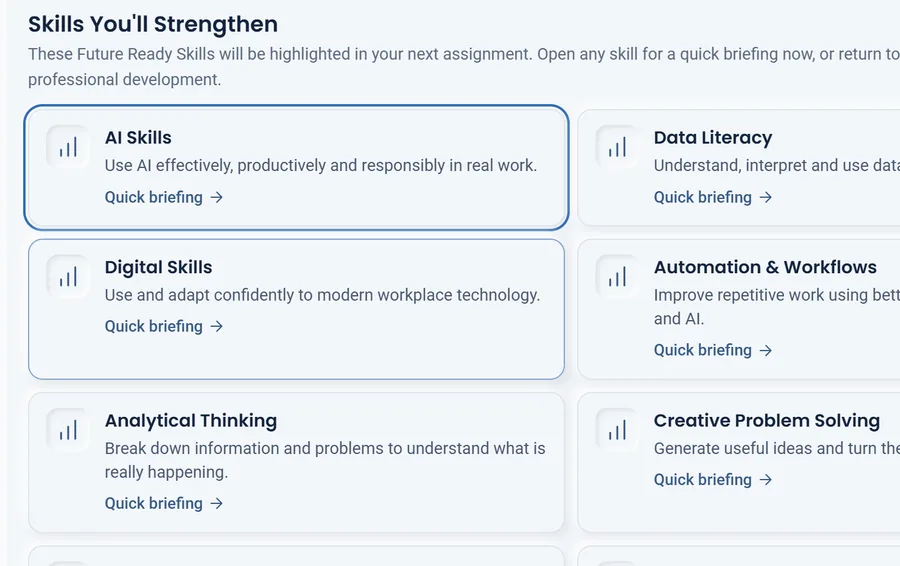
Build practical capability that keeps pace with changing workplace expectations.
Show Me What I’ll Learn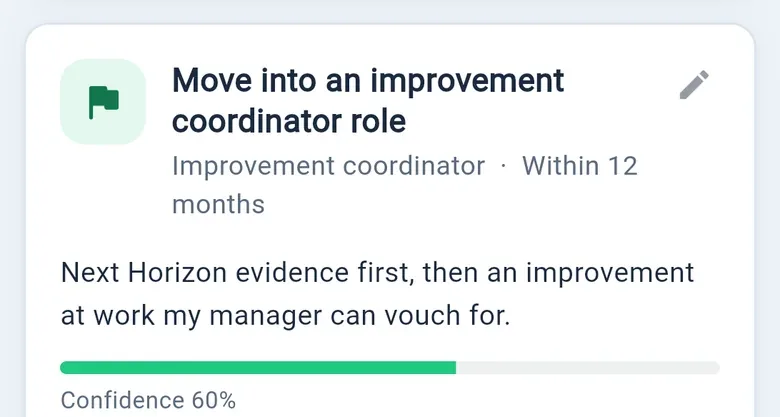
Create proof of your ability to improve systems, coordinate projects and deliver results.
Show Me the Career Advantage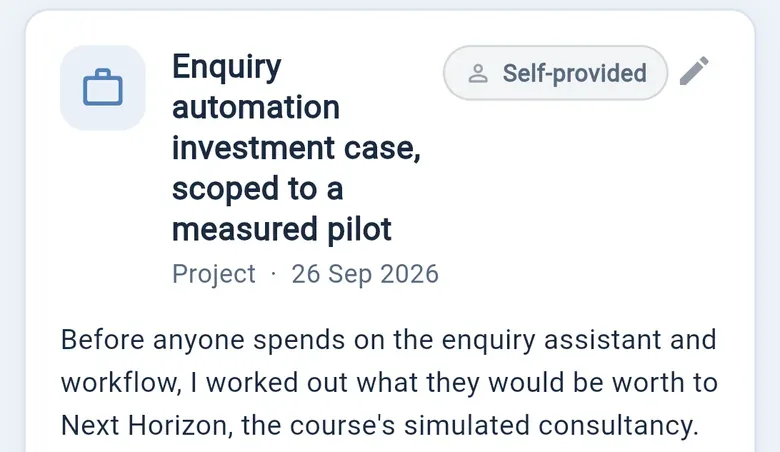
Move beyond prompts and start applying AI to real workplace problems.
Show Me the Practical Projects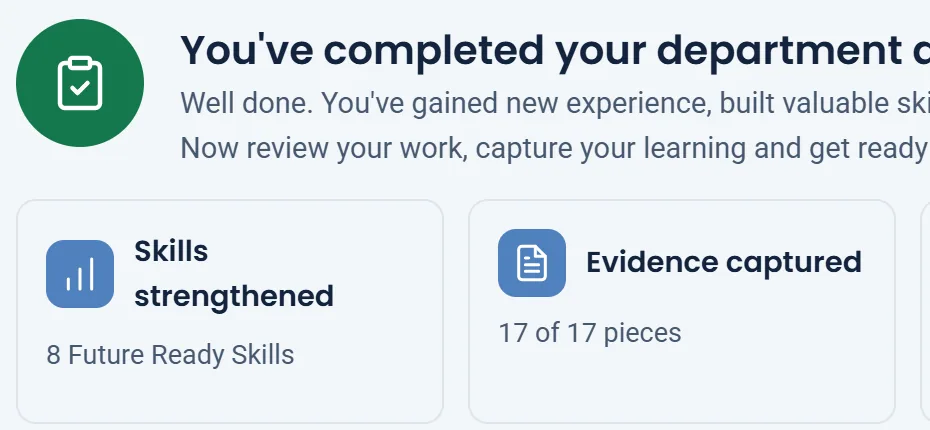 Every piece kept
Build evidence of judgement, communication, implementation and measurable workplace value.
Show Me What Employers SeeScreens from Next Horizon and My Career Hub, shown with John Goodman, a demonstration learner.
Become the person who improves how work gets done.
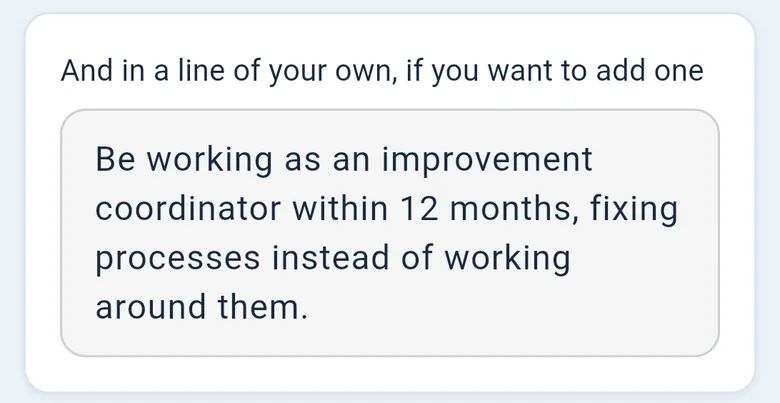
Week one In his Career Action Plan
“…fixing processes instead of working around them.”
End of Digital In his Career Portfolio
Designed, built and tested an AI enquiry assistant.
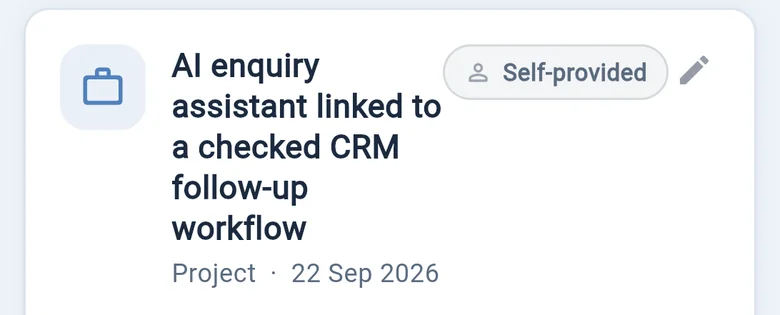
“One failed: a returning client created a second contact and a new Lead, because my check matched on email only. I changed it to match the organisation as well, re-ran the test and it passed.”
You will learn how to:
- Identify workplace problems worth solving
- Use AI and digital tools responsibly
- Improve systems, workflows and customer experiences
- Analyse information and make better decisions
- Communicate recommendations clearly
- Support people through change
- Measure workplace and business value
- Connect improvements into a wider strategy
Shown with John Goodman, a demonstration learner.
Where learning becomes real.
Next Horizon is EduSmart’s complete Australian business simulation, and it is what we mean by Immersive Workplace Learning. You join a realistic national organisation of around 95 people, work across six connected departments and a head office, and contribute to one organisation-wide transformation.
Your role inside Next Horizon is part of the learning experience. It is not an offer of paid employment.
Can Next Horizon improve itself before advising others?
Learners contribute to three connected workstreams:
-
1
Transform Next Horizon
-
2
Prove the AI investment
-
3
Prepare the external AI practice
You choose one approved client, then apply what you have learned to that client case by identifying opportunities, reviewing evidence and recommending what should happen next.
Join a department with a director and targets to hit.
Each department has its own practical project, but every project contributes to the same organisation-wide transformation.
Next Horizon is a national transformation organisation with:
- Around 95 employees
- Six connected departments
- A national hybrid workforce
- Realistic systems and business challenges
- A Future Ready Team in Head Office
- Internal improvement priorities
- A proposed AI and automation investment
- A future external AI transformation practice
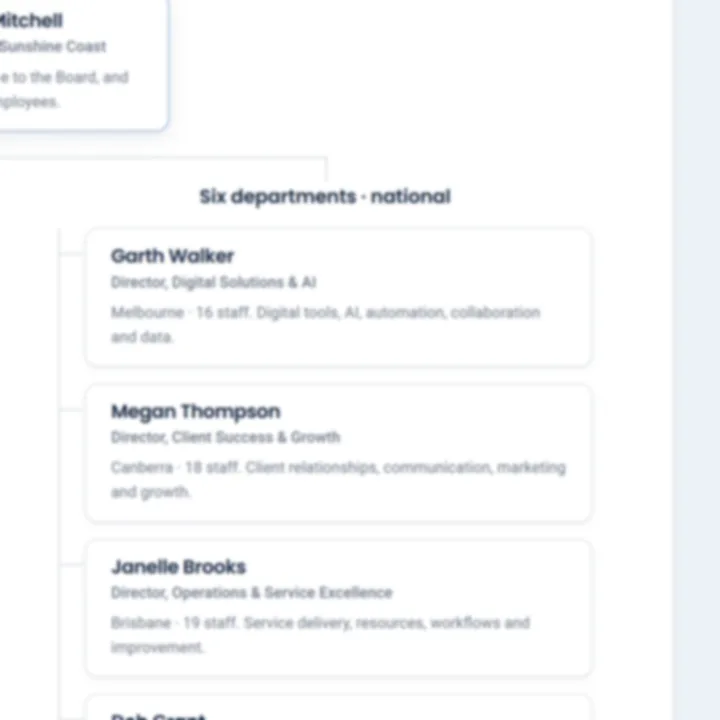
It has its own intranet, with dashboards, policies, an org chart and 95 staff. You work with its numbers, not a textbook’s.
Employers value people who can understand how a business works across departments, not only complete tasks inside one narrow role.
Next Horizon helps learners practise:
- Working with realistic information
- Making decisions with evidence
- Improving systems
- Communicating across teams
- Managing risk
- Measuring value
- Presenting recommendations
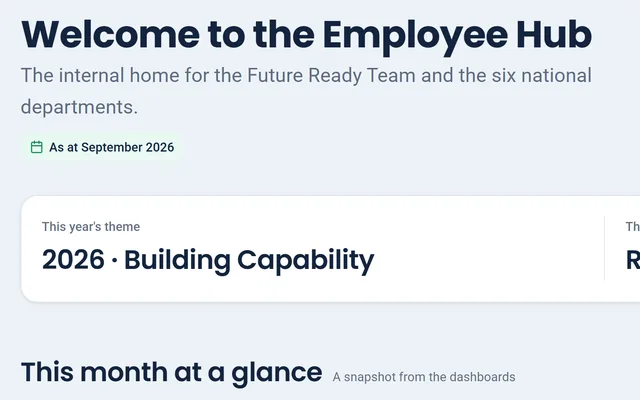
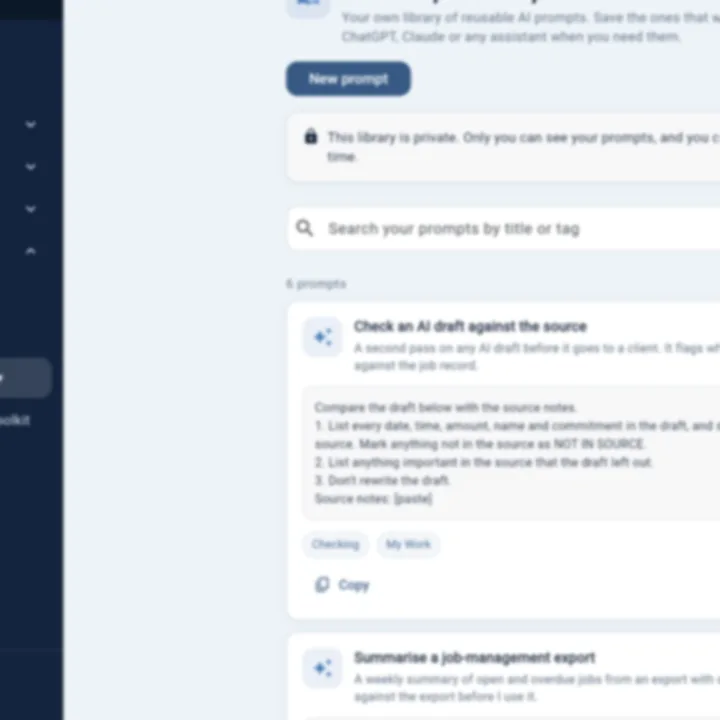
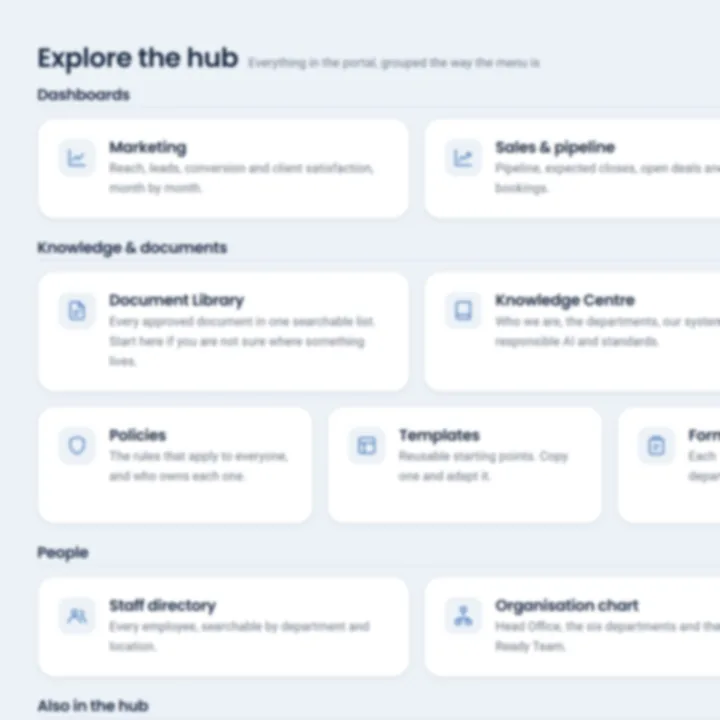
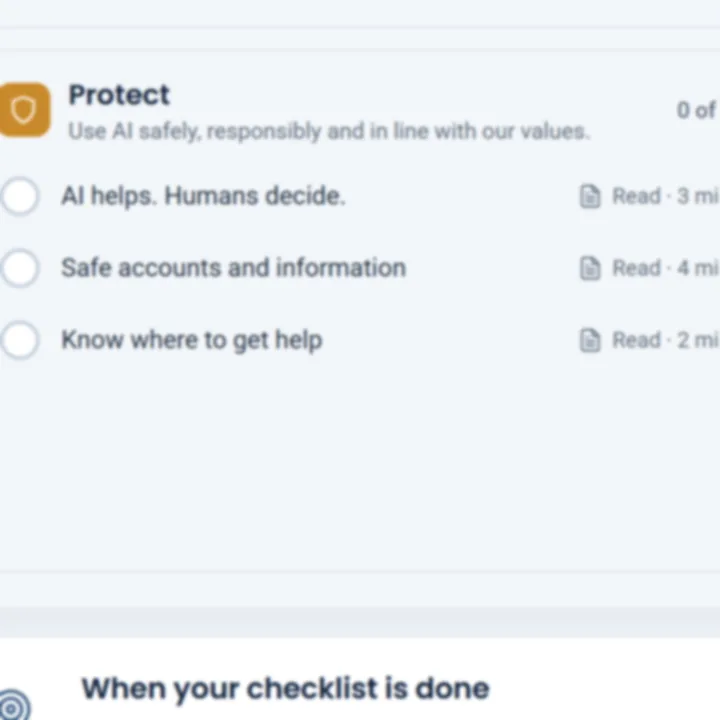
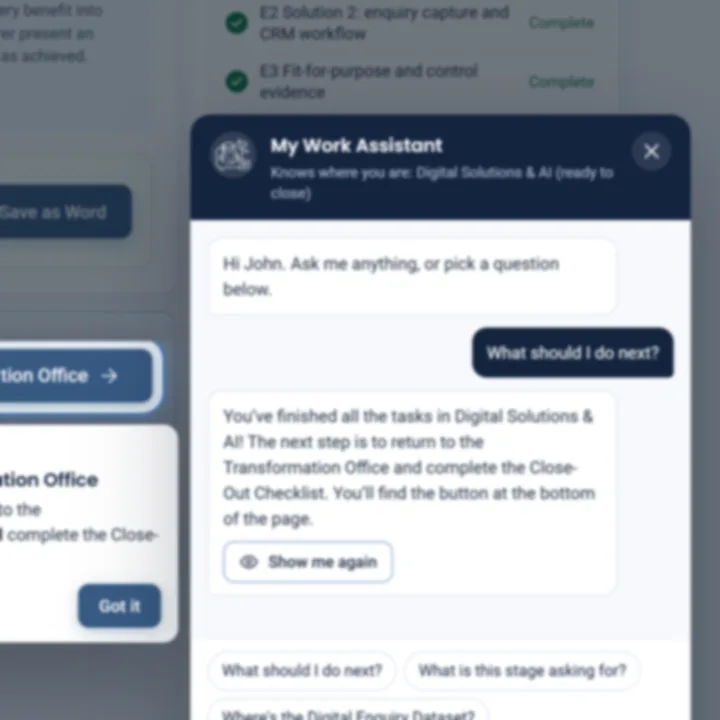
Screens from Next Horizon, shown with John Goodman, a demonstration learner.
Start by applying for your Next Horizon role
Your Learning Journey begins with an application to join the Next Horizon Transformation Office in an immersive AI and digital transformation role.
As part of the application, EduSmart also reviews your:
- Program suitability
- language, literacy and numeracy readiness
- digital readiness
- learner support needs
If you are suitable to proceed, the next step is formal EduSmart enrolment and RTO acceptance.
Next Horizon roles are part of the EduSmart learning environment and are not paid employment.
One connected learning journey. Not a collection of unrelated courses.
-
1
Understand the opportunity
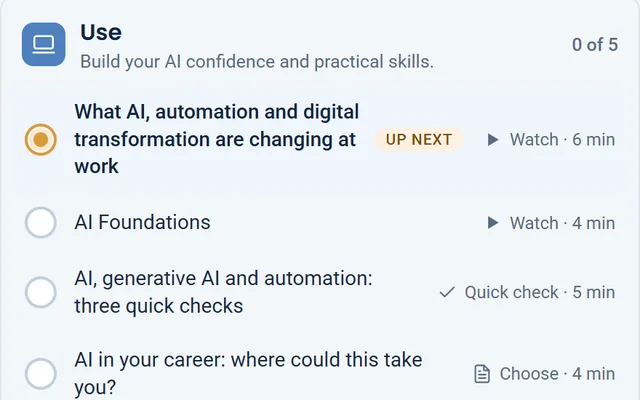
See how AI and workplace expectations are changing.
-
2
Build your foundations
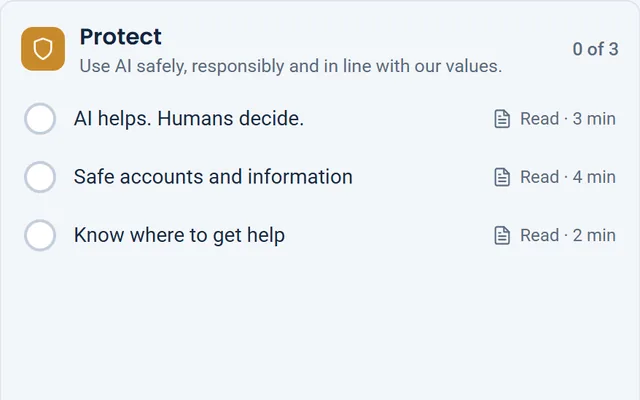
Learn to use AI safely, effectively and responsibly.
-
3
Join Next Horizon
Work inside a realistic national business simulation.
-
4
Complete six connected department projects
 You are here
Build practical capability across AI, customers, operations, people, risk and financial value.
-
5
Apply the 5D Improvement Cycle
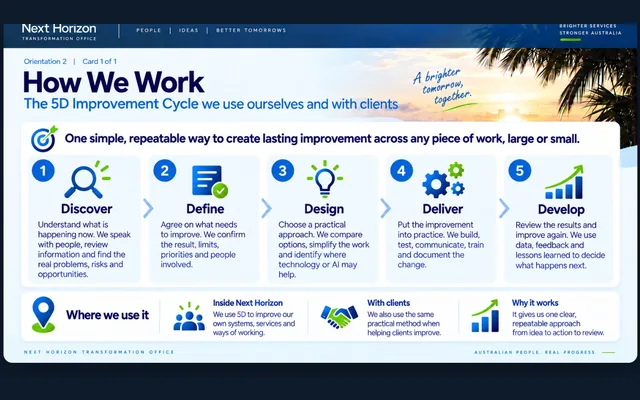
Discover, Define, Design, Deliver and Develop.
-
6
Capture your evidence
Complete practical workplace assets, reports and Workplace Value Scorecards.
-
7
Build your Career Success & Impact Portfolio
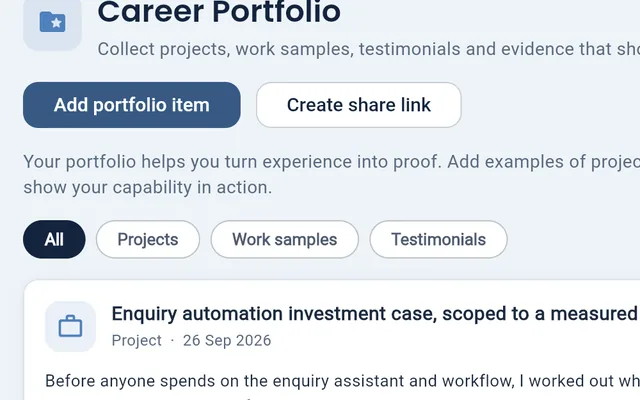
Present your strongest evidence to current and future employers.
-
8
Finish with the Diploma
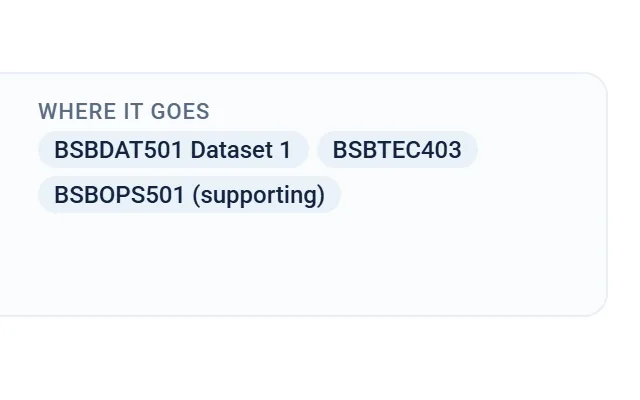
Complete the requirements of the BSB50120 Diploma of Business (Digital Transformation), then choose where your capability takes you next.
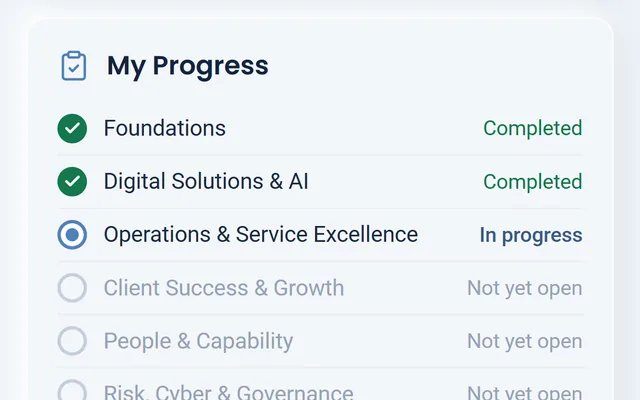
Screens from Next Horizon and My Career Hub, shown with John Goodman, a demonstration learner.
What Every Project Will Show
Every project you complete follows the same chain of evidence.
Complete practical projects across six connected departments.
Choose a department to see what you would do there, and why it counts at work.
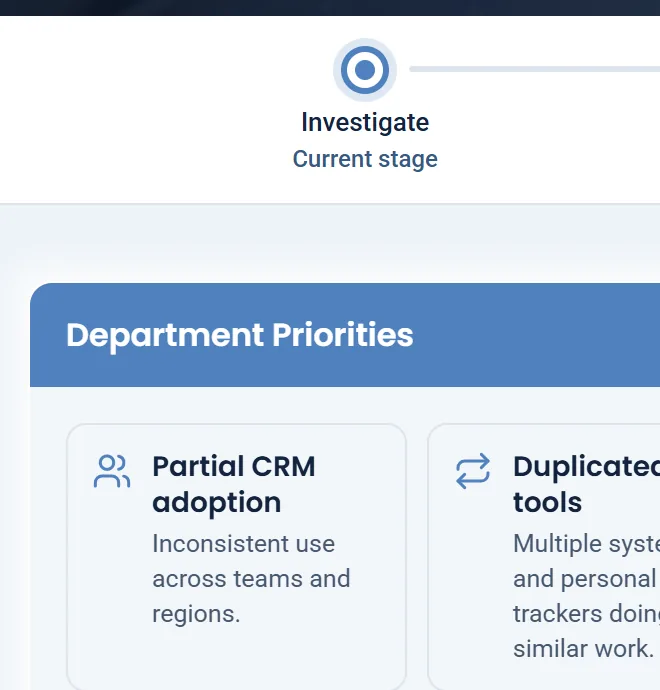
Digital Solutions & AI
Improve work with AI, systems and automation.
See a Digital Project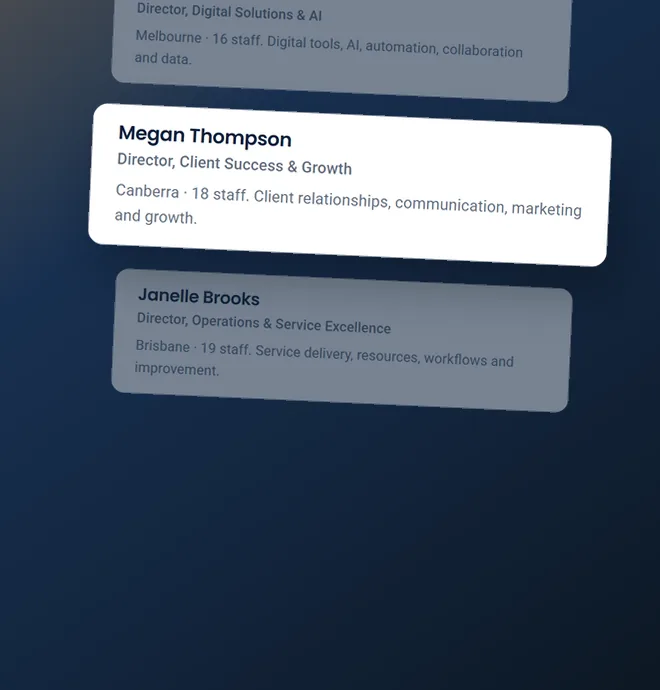
Client Success & Growth
Improve communication, customer experience and conversion.
See a Customer Project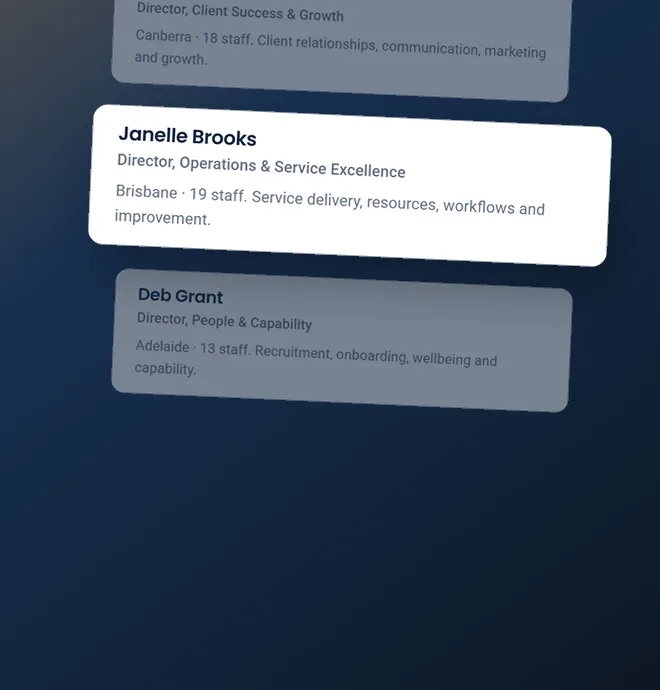
Operations & Service Excellence
Reduce delay, confusion and repeated work.
See an Operations Project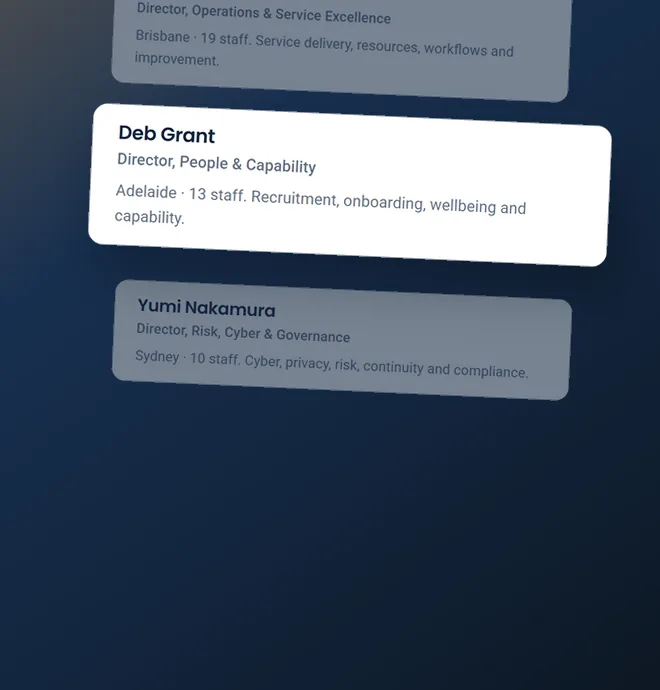
People & Capability
Help people succeed through workplace change.
See a People Project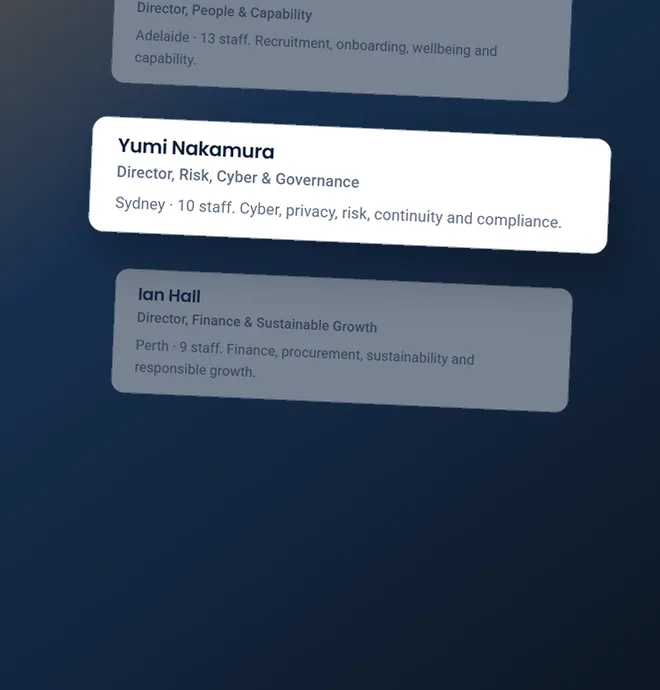
Risk, Cyber & Governance
Make workplace transformation safer and more trusted.
See a Risk Project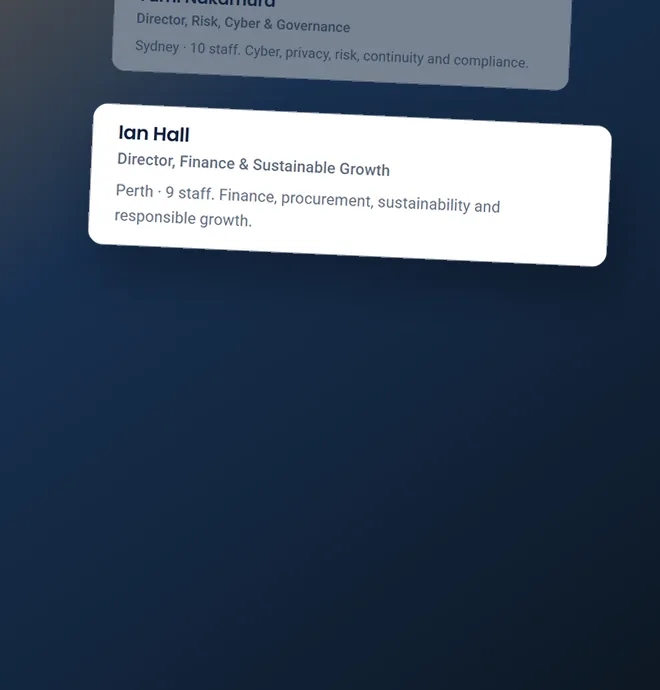
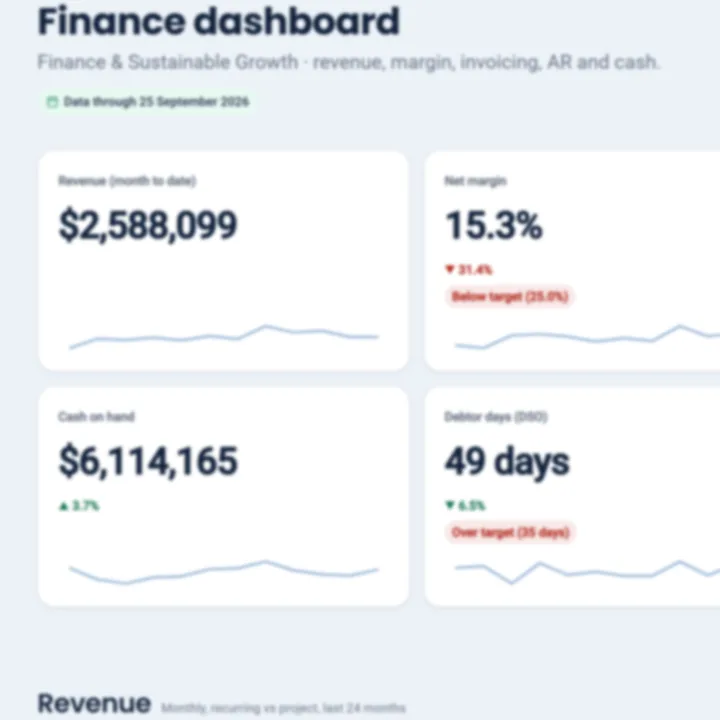
Finance & Sustainable Growth
Prove whether an improvement is worth the investment.
See a Value ProjectExamples of what your workplace projects may involve
- AI-supported enquiry and automation systems
- CRM and workflow improvements
- Customer experience improvements
- Process maps and operational improvements
- Recruitment and onboarding improvements
- Responsible AI and risk controls
- Budgets, investment analysis and value reporting
Each department sets one project. These are the kinds of work those projects involve.
Digital Solutions & AI
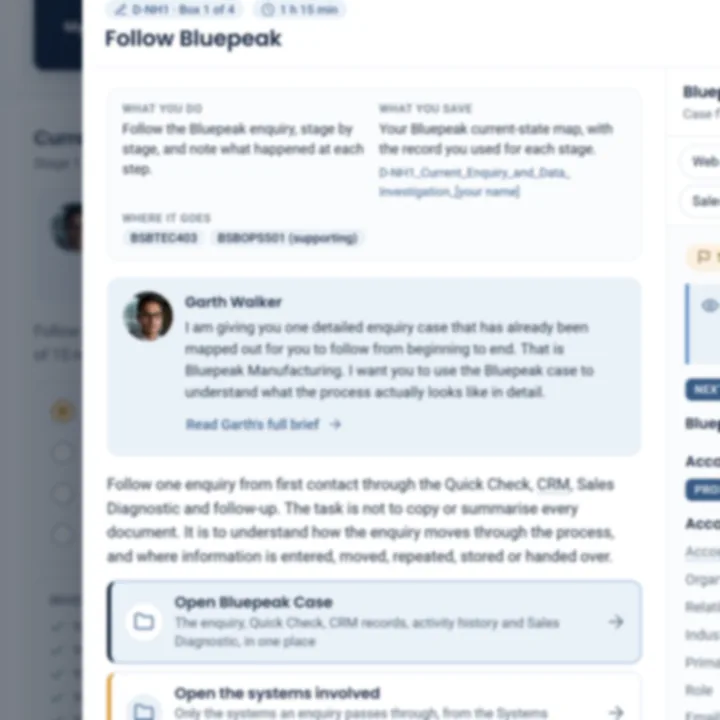
One project, start to finish

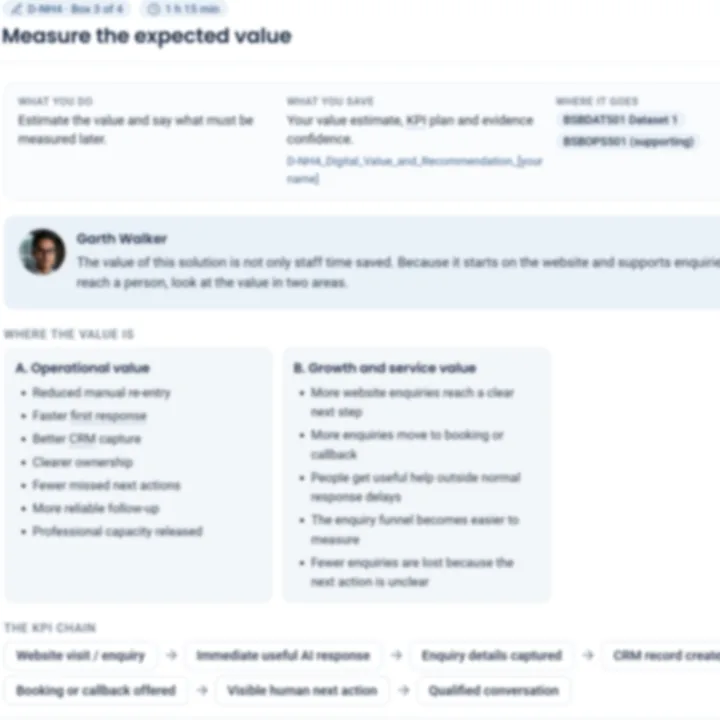
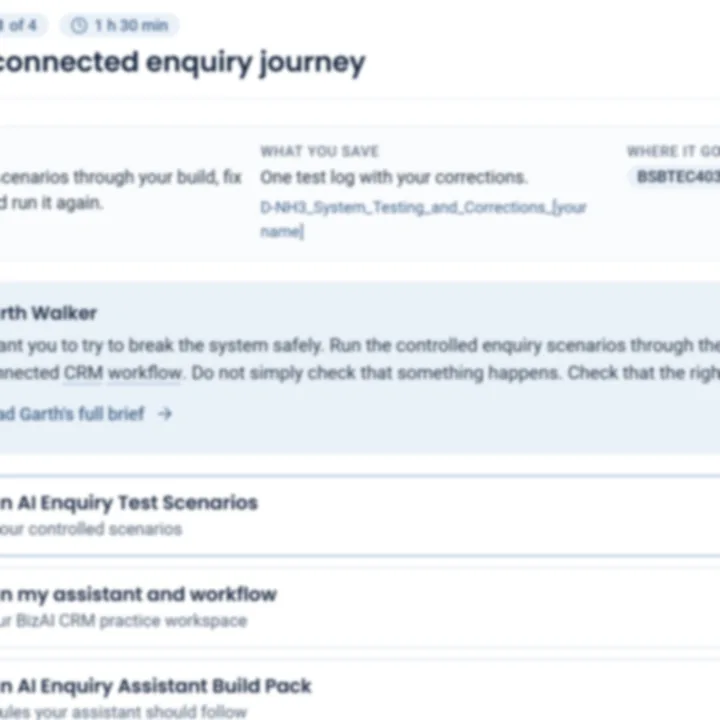
“Do not simply check that something happens. Check that the right thing happens.”Garth Walker, Director, Digital Solutions & AI, a Next Horizon character, briefing a test
A real client enquiry, gaps and all.
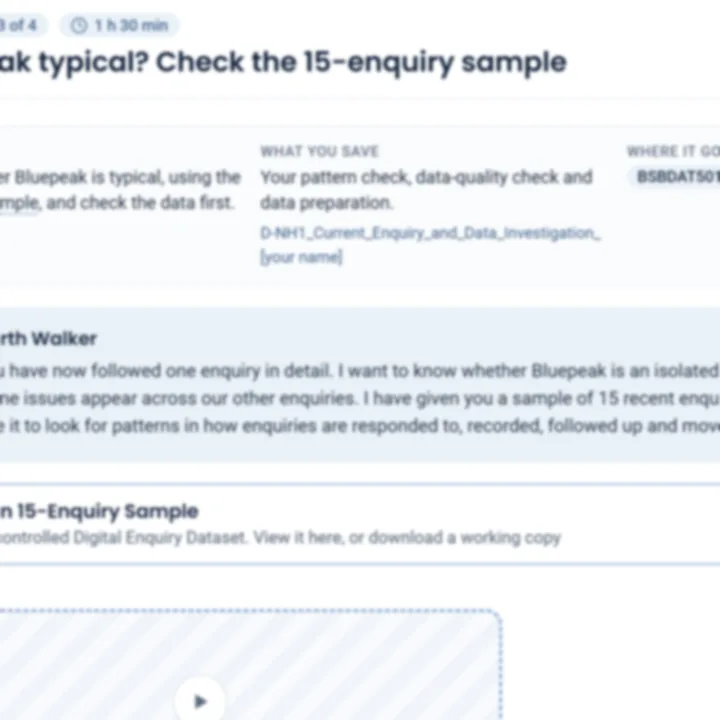
Bluepeak’s records don’t match what the client typed in. You trace where the process breaks before anyone fixes it.

Plan the fix before you build it.
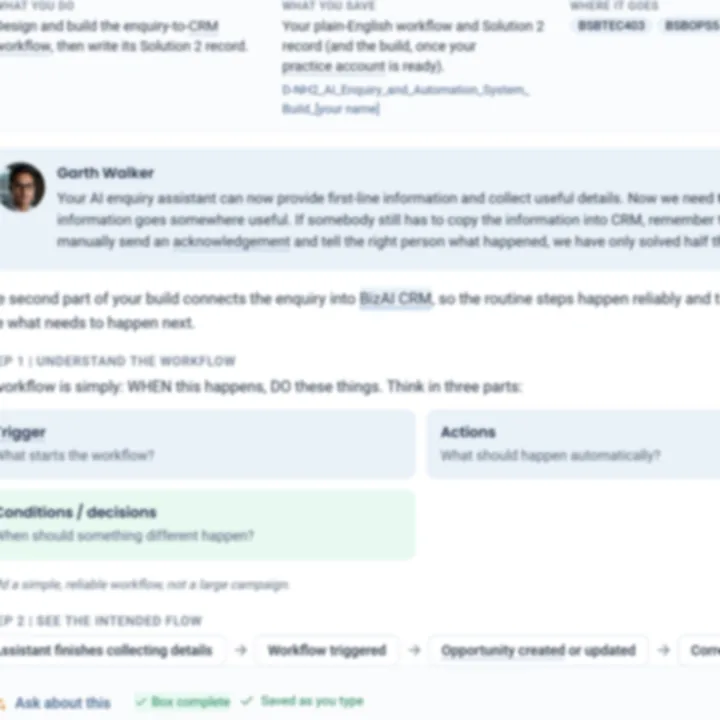
You set out the trigger, the actions and the checks in plain English first, so the workflow does what the business needs.

Finish with evidence you can show.
Every piece of the department’s evidence is kept, and the work carries into your career record.
Shown with John Goodman, a demonstration learner.
Build capabilities that remain useful as technology changes.
16 Future Ready Skills
What you build and prove
- AI Skills
- Data Literacy
- Digital Skills
- Automation & Workflows
- Cyber Security
- Analytical Thinking
- Critical Thinking
- Creative Problem Solving
- Systems Thinking
- Communication & Influence
- Collaboration
- Leadership & Change
- Adaptability & Resilience
- Learning Agility
- Business Value
- Continuous Improvement
12 capability areas
Where you apply them. Choose one below.
- Developing
- Applying
- Proficient
- Leading
Your skills are tracked as you apply them across the Learning Journey and build evidence of increasing capability.
The 12 areas
Using AI on real tasks, and checking what it produces before anyone relies on it.
At work
Drafting, summarising and sorting information faster, with the checks that stop an AI error reaching a client.
Evidence you could show
A working prompt set, and the task timed before and after, with the errors you caught.
Working in the shared tools your team already uses, so work moves cleanly between people.
At work
Shared spaces, folders and naming that let a colleague pick up your work without asking where it is.
Evidence you could show
The shared workspace you set up, and a count of repeat requests before and after.
Handling information and tools the way your workplace, and the law, expect.
At work
Knowing what can go into an AI tool, de-identifying data for testing, and checking a tool’s privacy terms first.
Evidence you could show
A data inventory for your project, and the safe-handling rules you wrote for it.
Writing and presenting for the people who have to act on your work.
At work
Briefs, reports and recommendations a manager can read once and decide on.
Evidence you could show
A decision brief, and a record of what your audience asked and decided.
Finding the real problem before fixing anything, then testing the fix on real work.
At work
Taking a recurring problem through the 5D Improvement Cycle instead of patching it again.
Evidence you could show
A written problem statement, and a recurrence count weeks after the change.
Gathering the information a decision needs, and showing how it changes the choice.
At work
Checking an AI summary against the underlying data before it shapes a decision.
Evidence you could show
An evidence table with sources and dates, and a short statement of the choice it supports.
Seeing how work really moves, and removing the waits and handovers that slow it.
At work
Mapping a process, finding where jobs sit waiting, and changing one step so the whole flow speeds up.
Evidence you could show
A process map, and one job timed end to end before and after.
Bringing people with you when the way they work changes.
At work
Asking the people affected before the change, and checking weeks later that the new way has stuck.
Evidence you could show
Consultation notes, and a take-up count after the change.
Putting a figure on what an improvement saves or gains, with working someone else can check.
At work
Baselines, assumptions and a value calculation a manager can challenge line by line.
Evidence you could show
Baseline figures and the value calculation, with every assumption written out.
Reducing the materials, energy, time and waste a process uses.
At work
Measuring what a process consumes, redesigning one step, and measuring again.
Evidence you could show
A before-and-after resource reading, and the trade-off you accepted.
Naming what could go wrong with a change, and putting controls in before go-live.
At work
A risk register with owners, and a test that breaks the process on purpose to see whether a control catches it.
Evidence you could show
A risk register, and the result of a failure rehearsal.
Making an improvement hold after you step away, and naming the next one.
At work
Measuring the result against the target, updating the way of working, and handing it over.
Evidence you could show
The result against target, and a handover pack someone else can run.
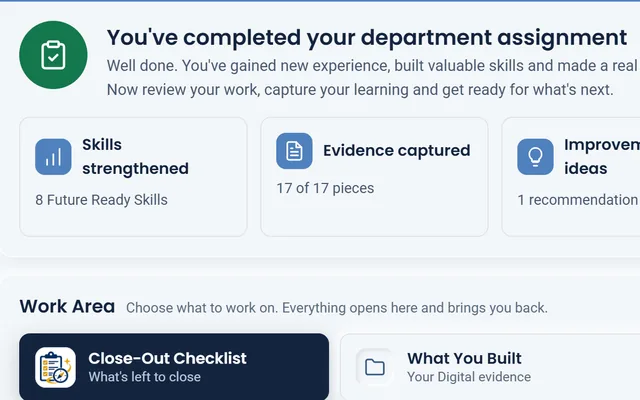
Screens from Next Horizon and My Career Hub, shown with John Goodman, a demonstration learner.
A method you can use in any workplace.
The 5D Improvement Cycle runs through every department. Choose a step to see what it means and where you use it.
Discover
Understand what is happening now.
1 Discover
What it means Look at the work as it really happens, through its records, people and systems, before deciding what is wrong.
In the course In Digital Solutions & AI you follow one client enquiry from first contact to follow-up, stage by stage.
Define
Identify the real problem and desired result.
2 Define
What it means Pin down the problem worth solving, and the result that would count as fixed.
In the course You check whether that enquiry is typical against a sample of 15, then write what goes wrong and what it costs.
Design
Compare options and plan what could work better.
3 Design
What it means Weigh the options and plan the change before anything is built.
In the course You plan the workflow in plain English first: what starts it, what happens next, and the checks that stop a duplicate.
Deliver
Build, test or implement the improvement.
4 Deliver
What it means Build it, test it on real cases, and put it into practice.
In the course You build the enquiry assistant and the CRM workflow, run the test scenarios and correct what fails.
Develop
Measure the value, capture the lessons and identify what happens next.
5 Develop
What it means Measure what the change is worth, record what you learned, and name the next improvement.
In the course You measure the value, hand the work over, and shape the next step as an investment opportunity.
More than completed learning.
Your EduSmart Career Success & Impact Portfolio can include:
Documents and plans
- Professional Career Profile
- Career Development Plan
- Business Transformation Strategy
- Business reports and presentations
Tools and assets you build
- AI Prompt Library
- AI Productivity Toolkit
- AI workflows and automations
- Reusable workplace assets
Evidence and recognition
- Workplace projects
- Before-and-after evidence
- Workplace Value Scorecards
- Digital Achievement Badges
- Employer Showcase
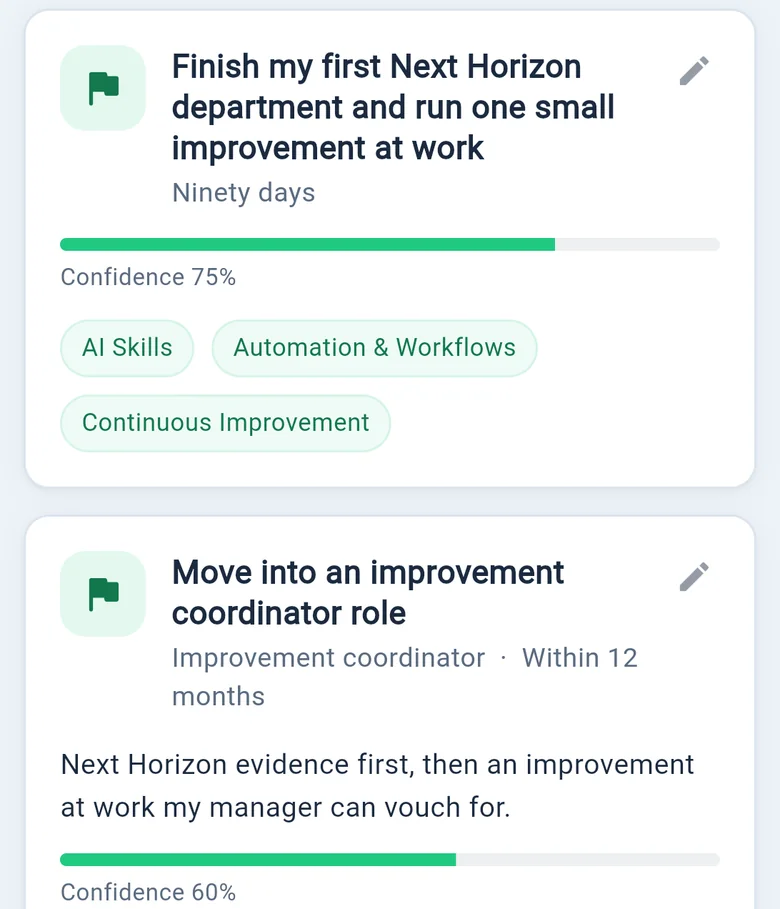
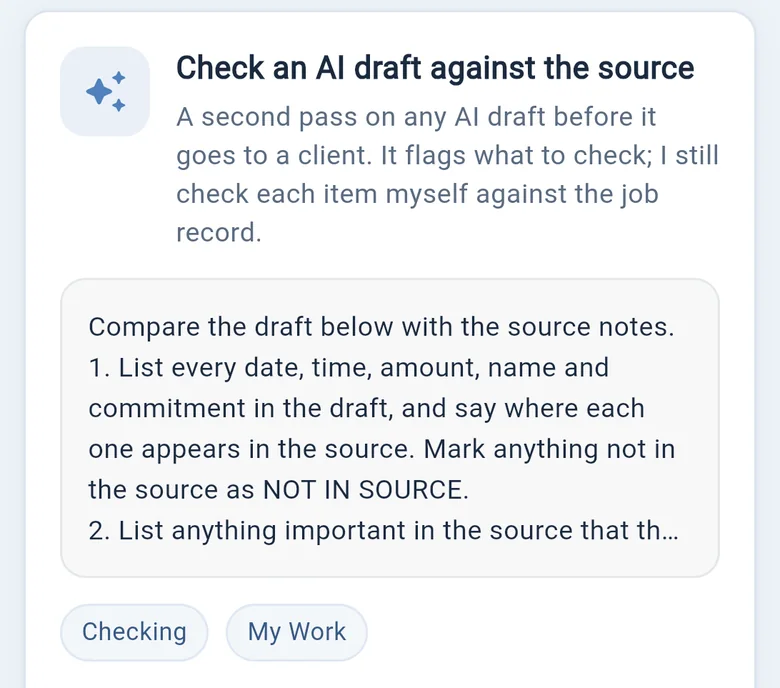
Shown with John Goodman, a demonstration learner.
Your evidence stays with you
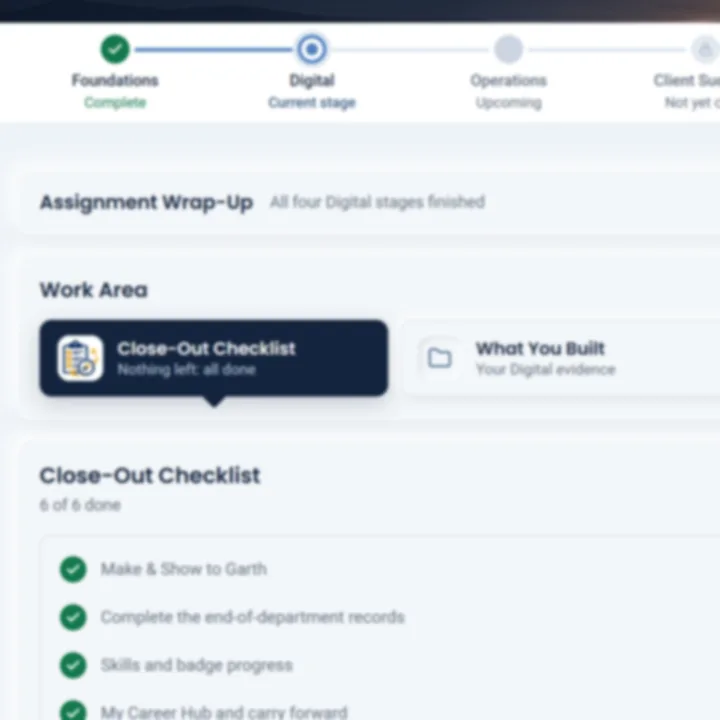
My Career Hub is where you keep your Future Ready Skills record, badges, Career Success & Impact Portfolio and selected evidence from your Learning Journey.
It gives you one place to show employers what you have built, improved and demonstrated.
As your evidence builds, you can earn four EduSmart Digital Achievement Badges.
- AI Workplace Practitioner
- AI & Automation Practitioner
- Digital Improvement Practitioner
- Digital Transformation Professional
Badges recognise demonstrated skills and evidence. They are separate from the nationally recognised Diploma.
Thinking about the role you are in now? See your value at work
Build the capability. Finish with recognised proof.
The AI Workplace Transformation Program includes the nationally recognised BSB50120 Diploma of Business (Digital Transformation).
- The Program
- How you build and apply practical capability through Immersive Workplace Learning.
- The Diploma
- The nationally recognised qualification awarded when all formal assessment and qualification requirements are successfully completed.
What you build
Through the same learning journey you build:
- Practical AI and automation capability
- Workplace transformation experience
- Career Success & Impact Portfolio
- Digital Achievement Badges
- Employer-ready evidence
- BSB50120 Diploma of Business (Digital Transformation)
What the Diploma requires
Finishing the projects is not the same as being awarded the Diploma.
It is awarded when all of these are met:
- Complete unit evidence
- Valid and sufficient assessment
- Assessor judgement
- Completion of all qualification requirements
Evidence created through your program projects is used towards the Diploma where it meets the formal assessment requirements.
The qualification included
Diploma of Business (Digital Transformation)
BSB50120, included in the AI Workplace Transformation Program.
The Career Success & Impact Portfolio and the digital achievement badges are EduSmart’s own. They sit alongside the Diploma rather than forming part of it.
Starting a nationally recognised qualification? Read the Student Handbook before you begin. It explains how your qualification is delivered, assessed and supported.
EduSmart Institute is an Australian Government Registered Training Organisation (RTO Code 45984).


Shown with John Goodman, a demonstration learner.
Short learning. Practical tools. Real application.
You spend more time building, testing and presenting than writing long academic reports.
Designed for working adults
- About 4 hours a week
- About 10 months for the Learning Journey
- Up to 18 months to complete and submit the required qualification assessment evidence
- Entirely online
- No scheduled classes to miss
- Work through the Learning Journey in the required sequence, at times that suit you
- Short Success Briefings
- Practical one-page tools
- Guided Action Sessions
- Workplace implementation
- Support from AI Coaches and AI Managers
- Examples and optional deeper resources
- Feedback, reflection and evidence capture
You may receive:
- Short Success Briefings
- Practical guides and templates
- Action Sessions
- AI Coach support
- AI Manager guidance
- Examples and walkthroughs
- Feedback on practical work
- Portfolio support
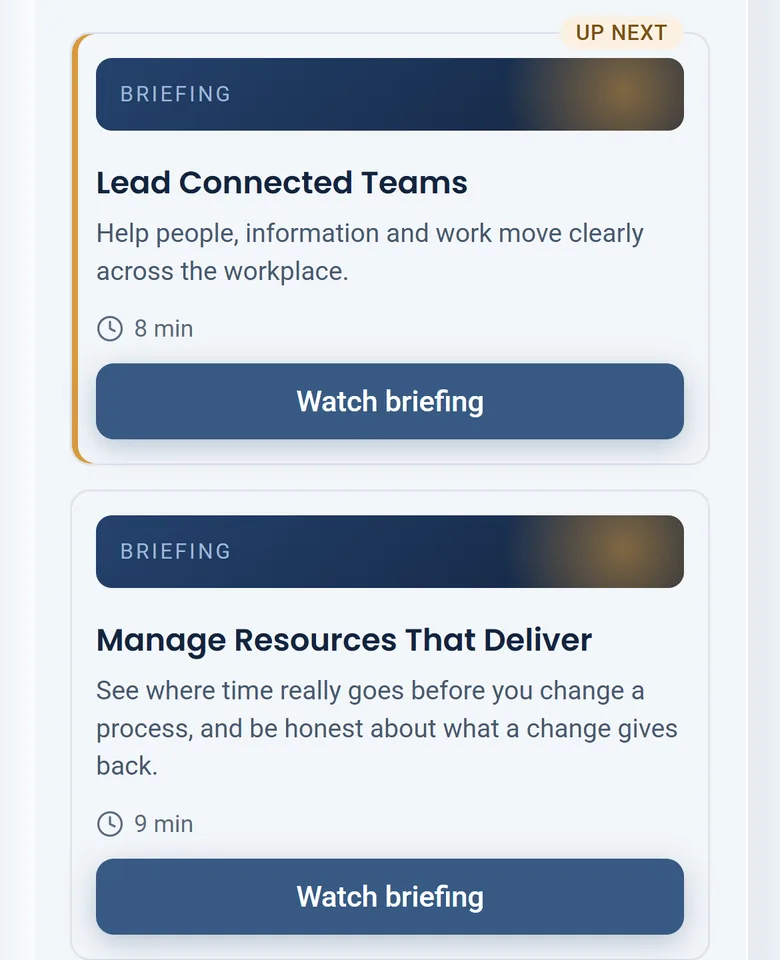
 Planned time
Shown with John Goodman, a demonstration learner.
Is this program right for you?
This program may suit you if you:
- Are already employed and want to move forward
- Can see AI changing your work
- Want practical capability rather than another passive course
- Have experience but need stronger career proof
- Want to move into coordination, operations, transformation, consulting or leadership
- Want to demonstrate value to your current employer
- Want evidence that supports a future job application
- Are prepared to complete practical workplace projects
You do not need:
- A technical background
- Coding experience
- To be an AI expert
- Previous management experience
- To know your final career direction before starting
Still not sure?
Check Whether It Fits MeExplore by role AI for Project Managers AI for Operations & Business Managers AI for HR & People Professionals
Before you decide Frequently asked questions What is AI, automation and digital transformation? Why EduSmart Program Guide Career Insights
$2,997, including the BSB50120 Diploma of Business (Digital Transformation). Payment plans available.
Build the capability. Finish with the qualification.
One enrolment covers both: the practical program, and the nationally recognised Diploma it includes.
Your application begins with your immersive Next Horizon role and suitability review. Formal EduSmart enrolment follows if you proceed.