
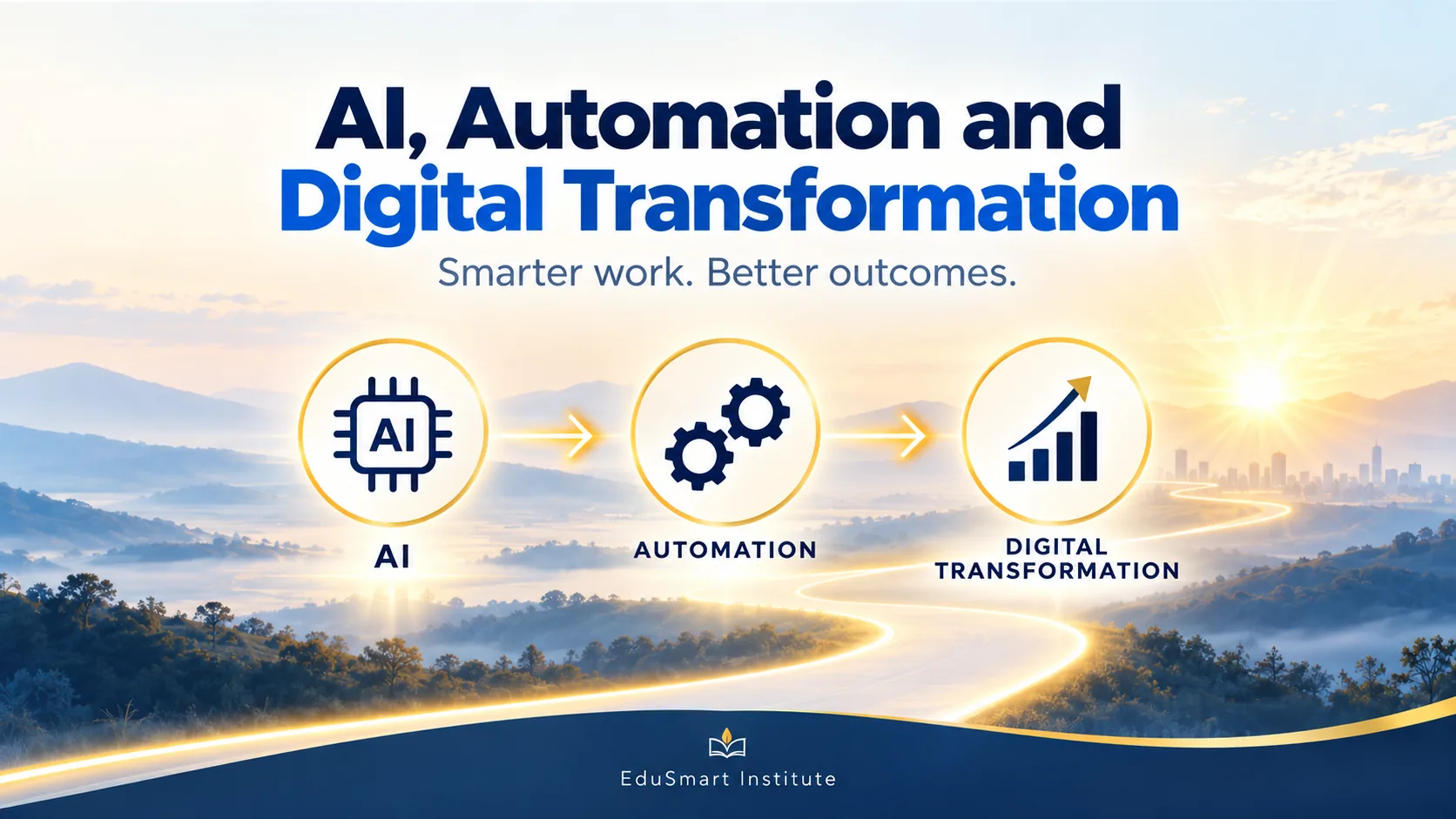
AI. Automation. Digital transformation.
What is the difference?
-
AI
Helps people create, analyse, organise and think.
What AI does at work -
Automation
Helps routine work move without repeating every step manually.
How work moves -
Digital transformation
Connects people, process, technology and information to improve how the organisation works.
The bigger change
Together they can help workplaces become more productive, connected, responsive and future-ready.
AI helps people think, create and analyse.
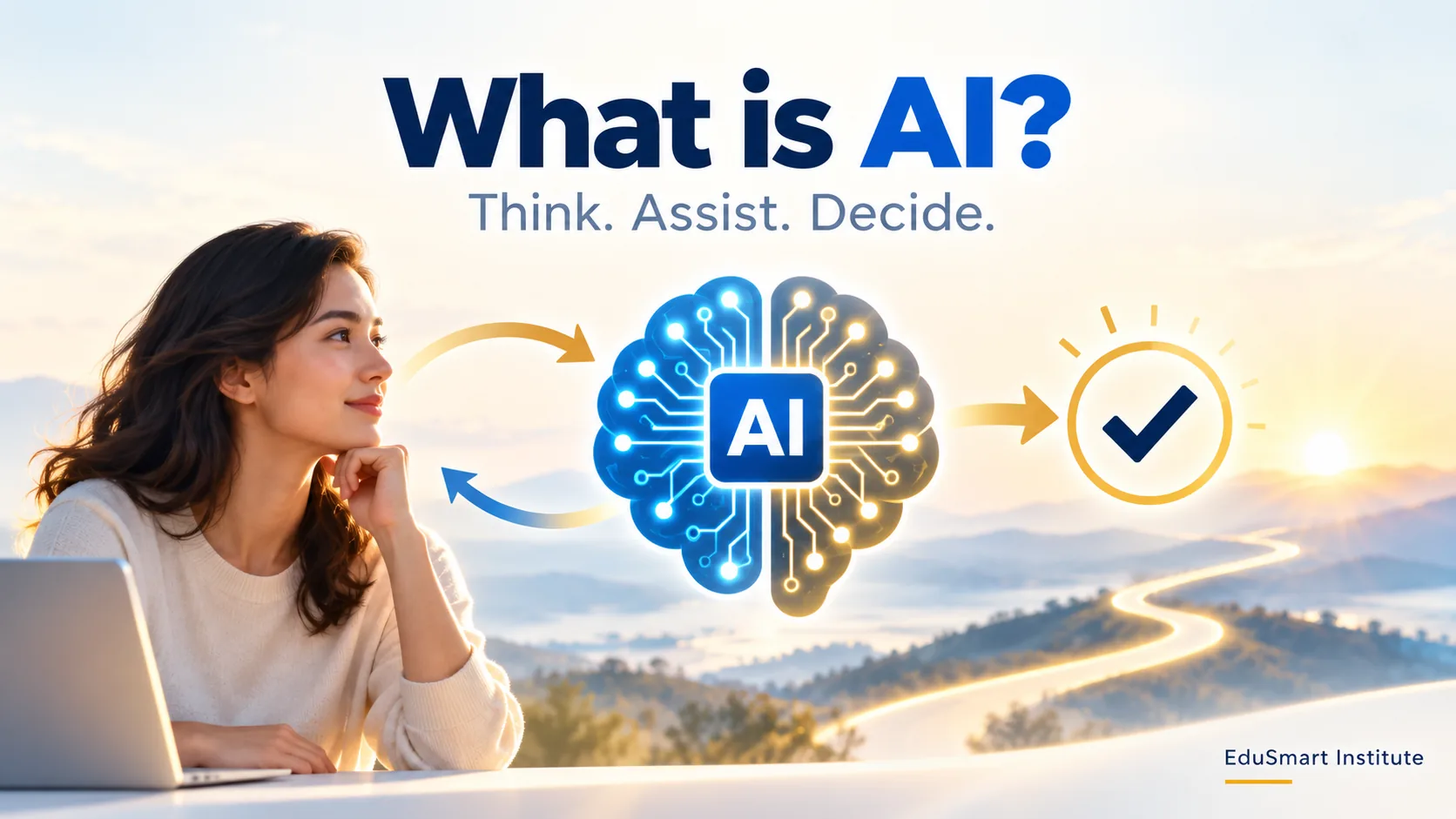
AI is increasingly becoming part of everyday work. It can help people:
- Draft and improve content
- Summarise information
- Compare options
- Analyse data
- Generate ideas
- Organise information
- Support customer and workplace communication
But AI is not the final decision-maker. People still need to provide context, check the output, use judgement, and take responsibility for the result.
A simple model
- Human need
- AI assists
- Human checks and decides
Key message AI is most useful when it supports human judgement rather than replacing it.
Automation helps work move.
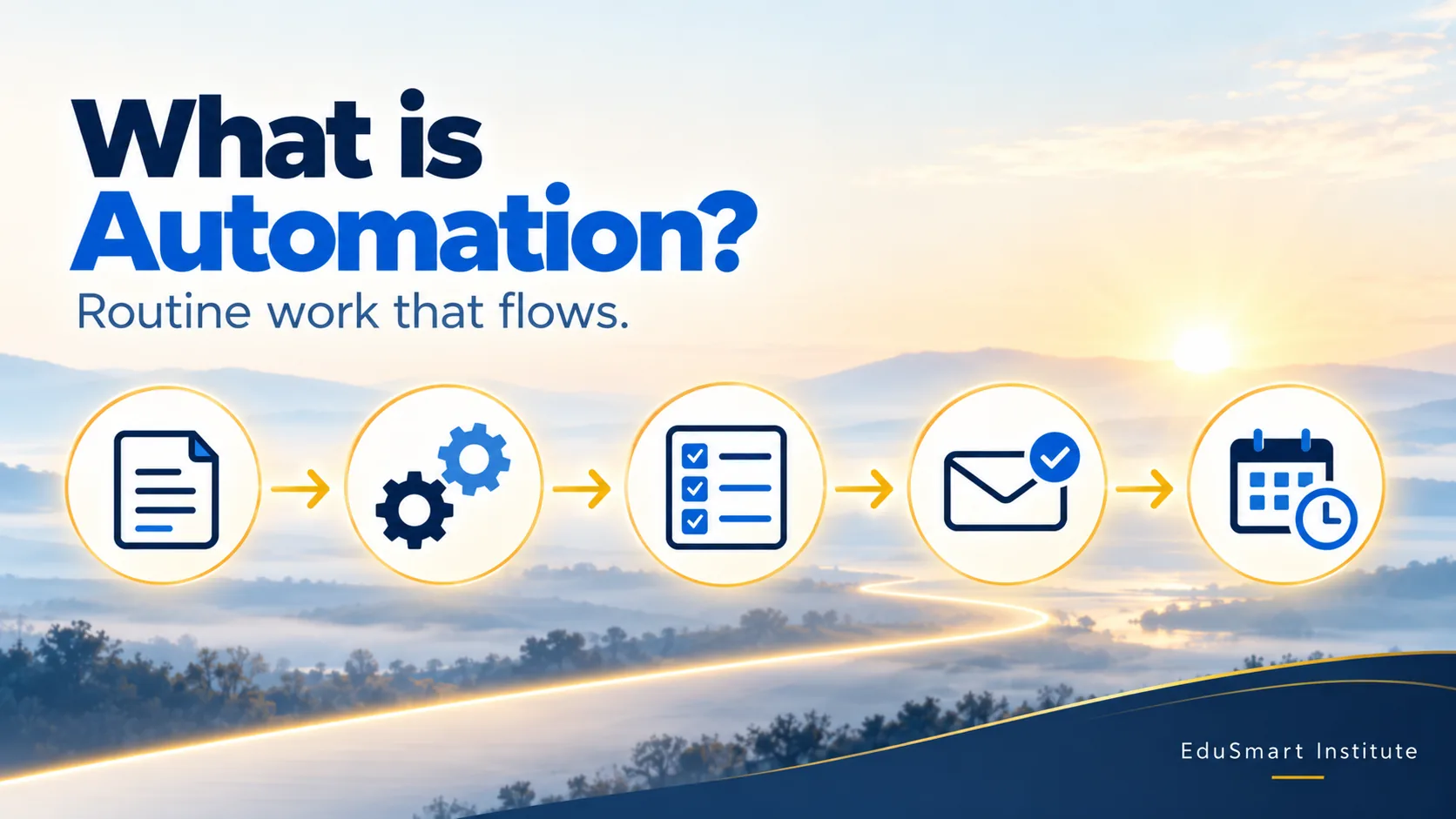
Automation is different from AI. It is about making routine steps happen consistently without someone manually repeating every action.
Automation can help reduce:
- Repeated administration
- Missed follow-ups
- Manual handovers
- Unnecessary copying of information
- Delays between steps
It can also help work become more consistent and easier to track.
For example
- A form is submitted
- A CRM record is updated
- A task is created
- A message is sent
- A follow-up is scheduled
Key message Good automation removes unnecessary repetition while keeping the right people in control.
Digital transformation is the bigger change.
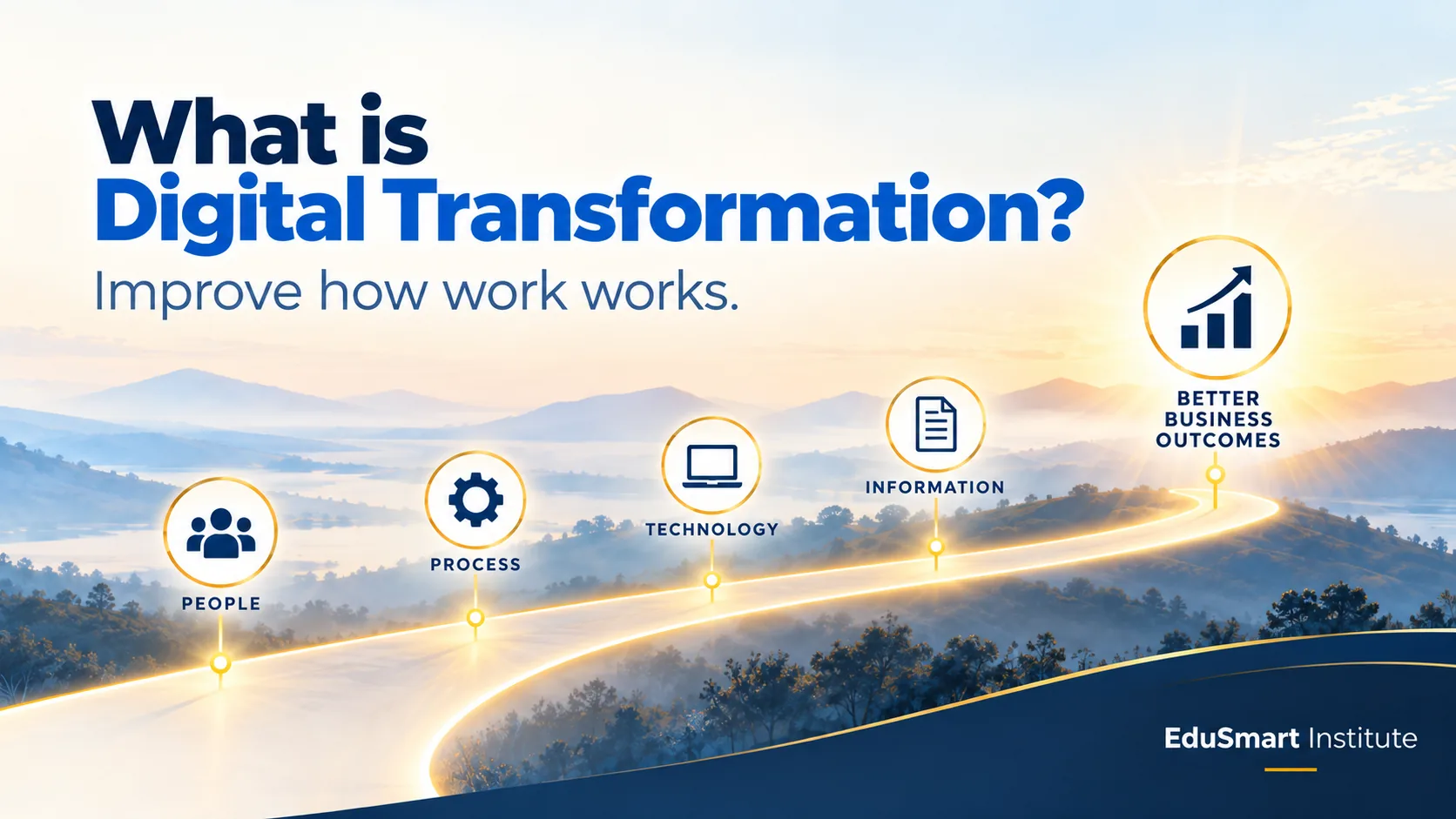
Digital transformation is not simply installing new software. And it is not the same as using AI.
It is the broader process of improving how an organisation works by connecting:
- People
- Process
- Technology
- Information
The aim is to create better outcomes. That might mean:
- Faster service
- Fewer errors
- Less rework
- Clearer information
- Better customer experiences
- Stronger decisions
- Safer ways of working
- Improved productivity
- Measurable business value
Key message Digital transformation changes the way work happens. New tools are only one part of it.
How AI, automation and digital transformation work together.
The strongest workplace change usually happens when these three ideas are connected.
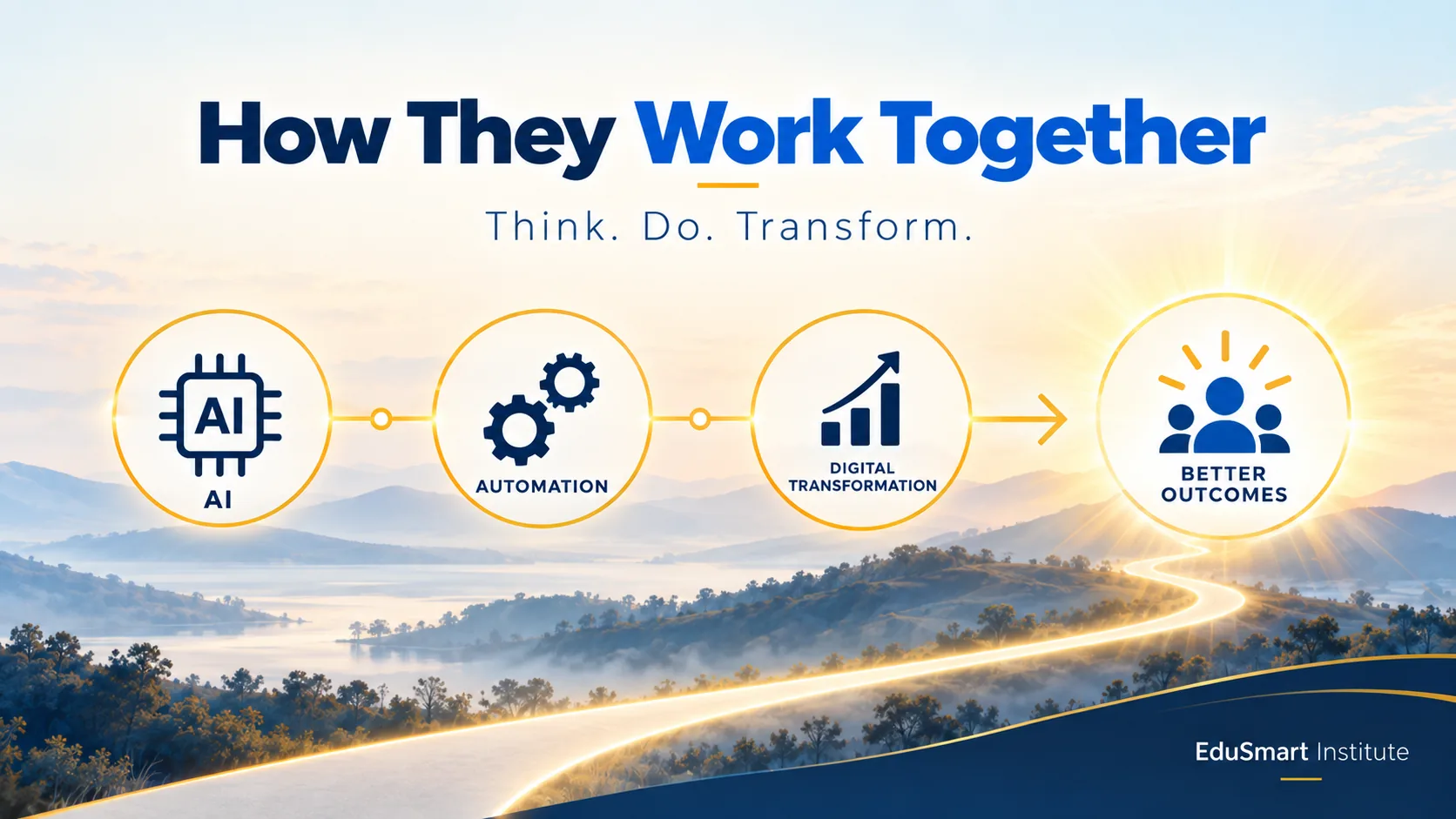
- AI
- Helps people think, create, analyse and explore.
- Automation
- Helps routine work move reliably from one step to the next.
- Digital transformation
- Connects the wider change across people, processes, systems, information and business priorities.
A simple way to think about it
- AI may improve a task.
- Automation may improve a workflow.
- Digital transformation improves how the wider organisation works.
Why this matters for businesses.
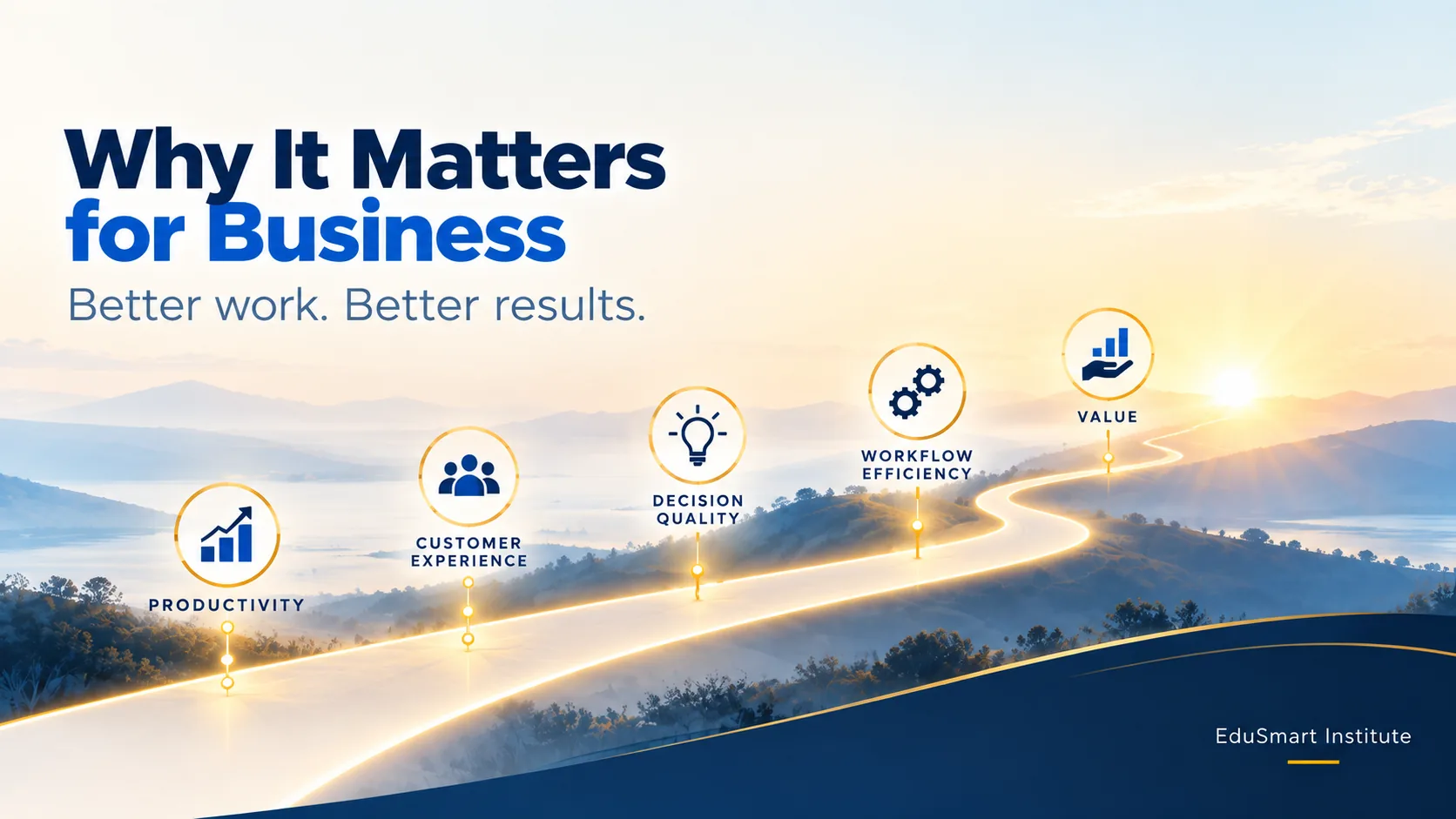
Most organisations do not need more technology for its own sake. They need better ways of working. That means knowing where AI or automation can create value, and where they cannot.
Businesses increasingly need people who can:
- Recognise useful AI opportunities
- Identify repetitive or inefficient work
- Improve workflows
- Connect systems and information
- Support employees through change
- Use AI responsibly
- Consider privacy, cyber and governance
- Test whether an improvement actually creates value
Where the value is In using AI and digital technology in a way that makes the organisation work better.
For employers Employer Insights AI Workforce Readiness Check
Why this matters for your career.
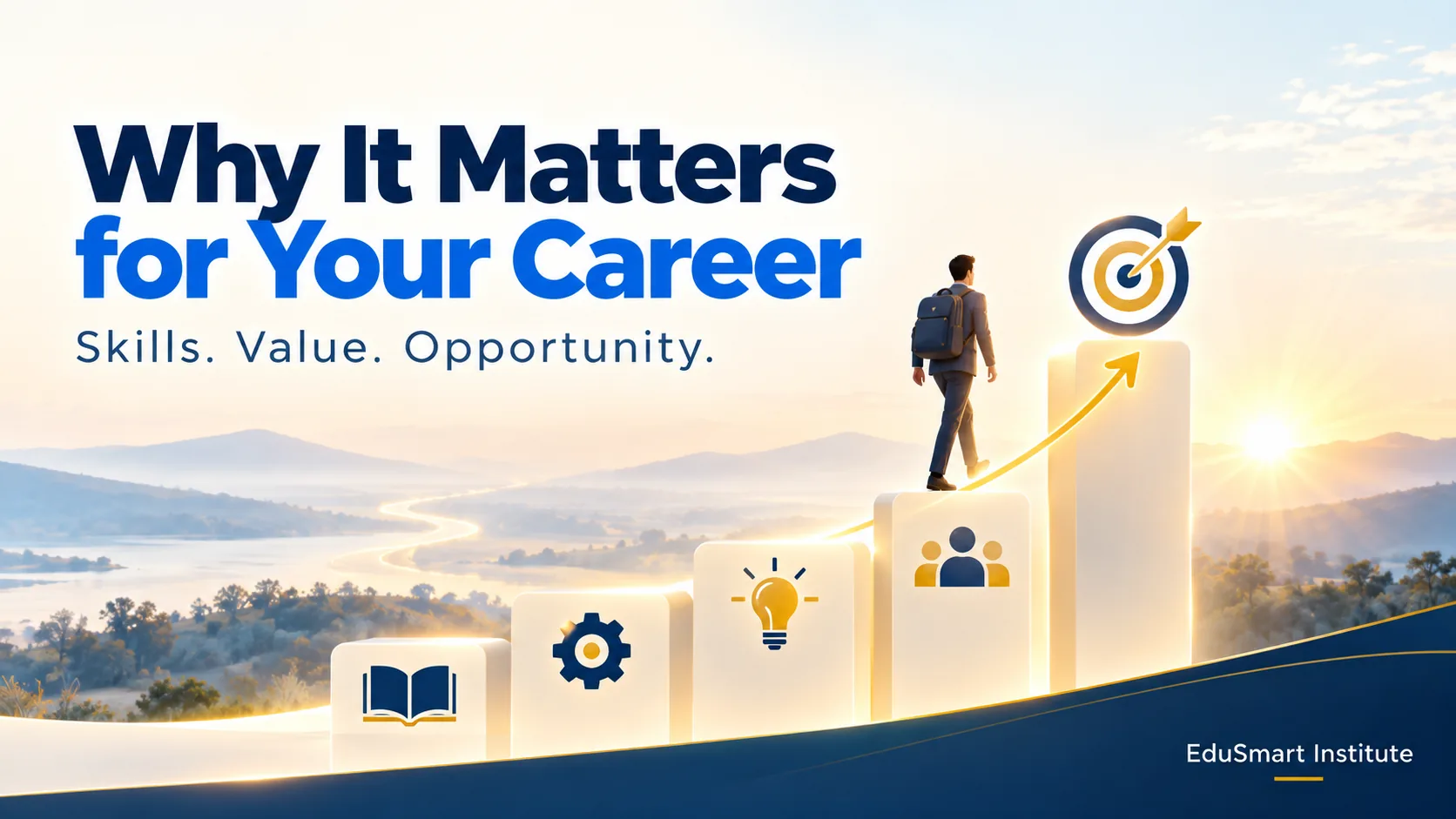
Knowing how to use an AI tool is useful. But employers increasingly need more than that. They need people who can take technology into a real workplace and help make it useful. That means being able to:
- Use AI with confidence
- Improve workflows
- Solve real business problems
- Work across teams
- Support change
- Make responsible decisions
- Explain what improved
- Prove the value created
These capabilities can strengthen an existing role or create pathways into areas such as:
- AI adoption
- Automation
- Digital projects
- Business improvement
- Process improvement
- Implementation
- Operations
- Transformation
Career message Technology will keep changing. The ability to use it well, improve work and create value can travel with you.
See it in your role AI for Project Managers AI for Operations & Business Managers AI for HR & People Professionals
Read next How to future-proof your career without chasing every AI tool Frequently asked questions
Learn it in a real workplace context.
EduSmart does not teach AI as an isolated technology subject. Learners step into a simulated workplace and use AI, automation and digital tools in the context of real business work.
They explore areas such as:
- Digital Solutions & AI
- Operations & Service Excellence
- Client Success & Growth
- People & Capability
- Risk, Cyber & Governance
- Finance & Sustainable Growth
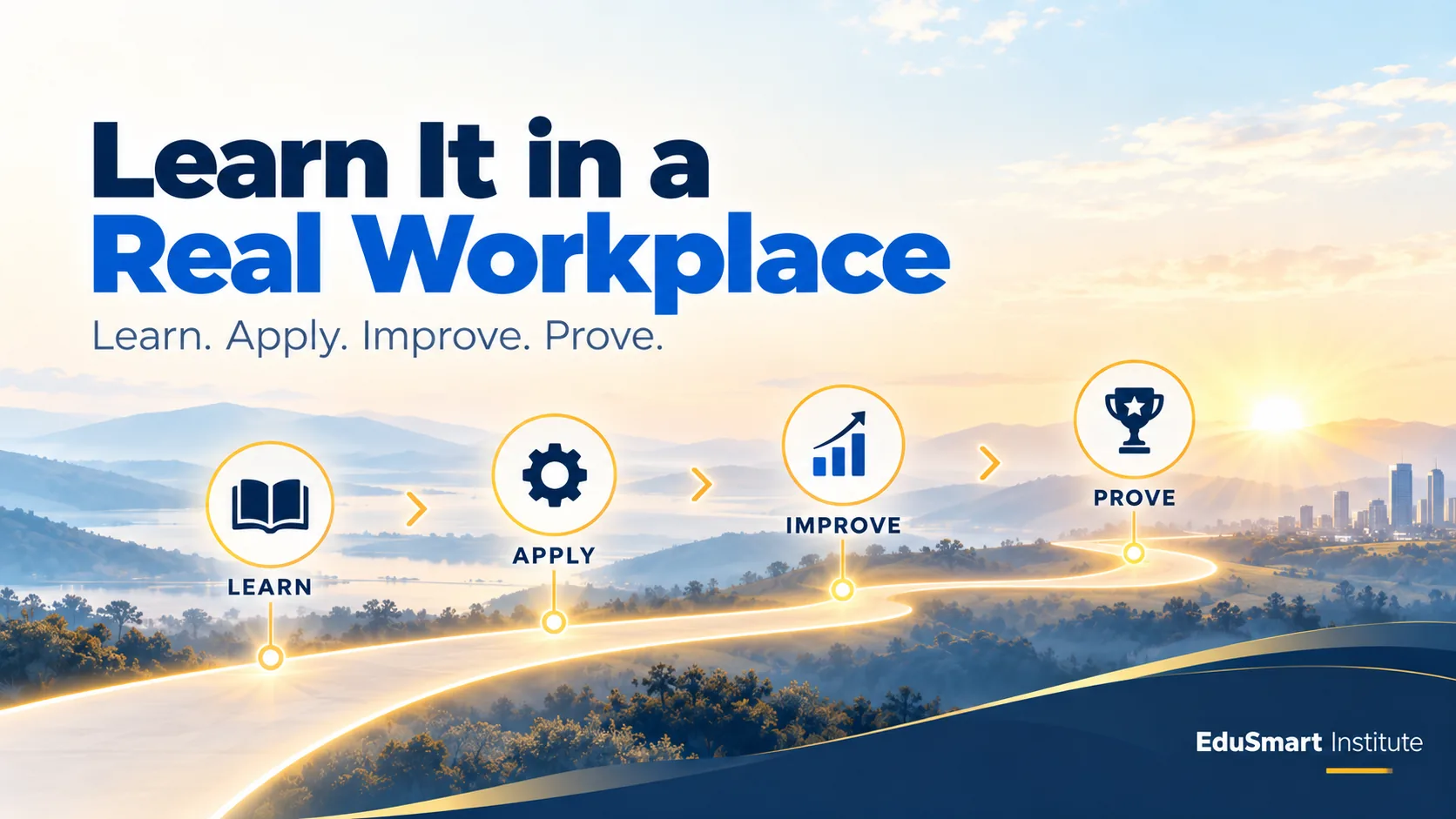
Along the way, learners build practical evidence of what they can do. They learn how to:
- GrowBuild future-ready capability.
- UseApply AI and digital tools to real work.
- ProtectUse technology responsibly and safely.
- ProveShow the value and impact of their work.

The result is more than knowledge of AI tools. It is experience applying AI and digital transformation thinking across a workplace.
The program includes the nationally recognised BSB50120 Diploma of Business (Digital Transformation), awarded only when all training and assessment requirements are met.